composer journaling app
UX/UI Mobile App Case Study
A concept journaling app that generates playlists based on the user’s entries.
Overview
I was going through a breakup. And the way I processed it, without fully realizing it at the time, was by building playlists. I'd arrange songs deliberately, almost obsessively: starting with the saddest, most defeated song I could find and ending with something triumphant. The sequence told the story of grief in stages. It was journaling, just without words.
That realization became the app. What if the act of writing about how you feel could generate the playlist that matches where you are — and then slowly lead you somewhere better?
Goals
Make journaling feel less like a task and more like an act of self-discovery.
Use music as an emotional reward — a reason to come back and write again.
Help people find new artists while they figure out how they feel.
Creative Direction
UX/UI Design
User Research
Wireframing
Prototyping
Branding
Prototype
App Design
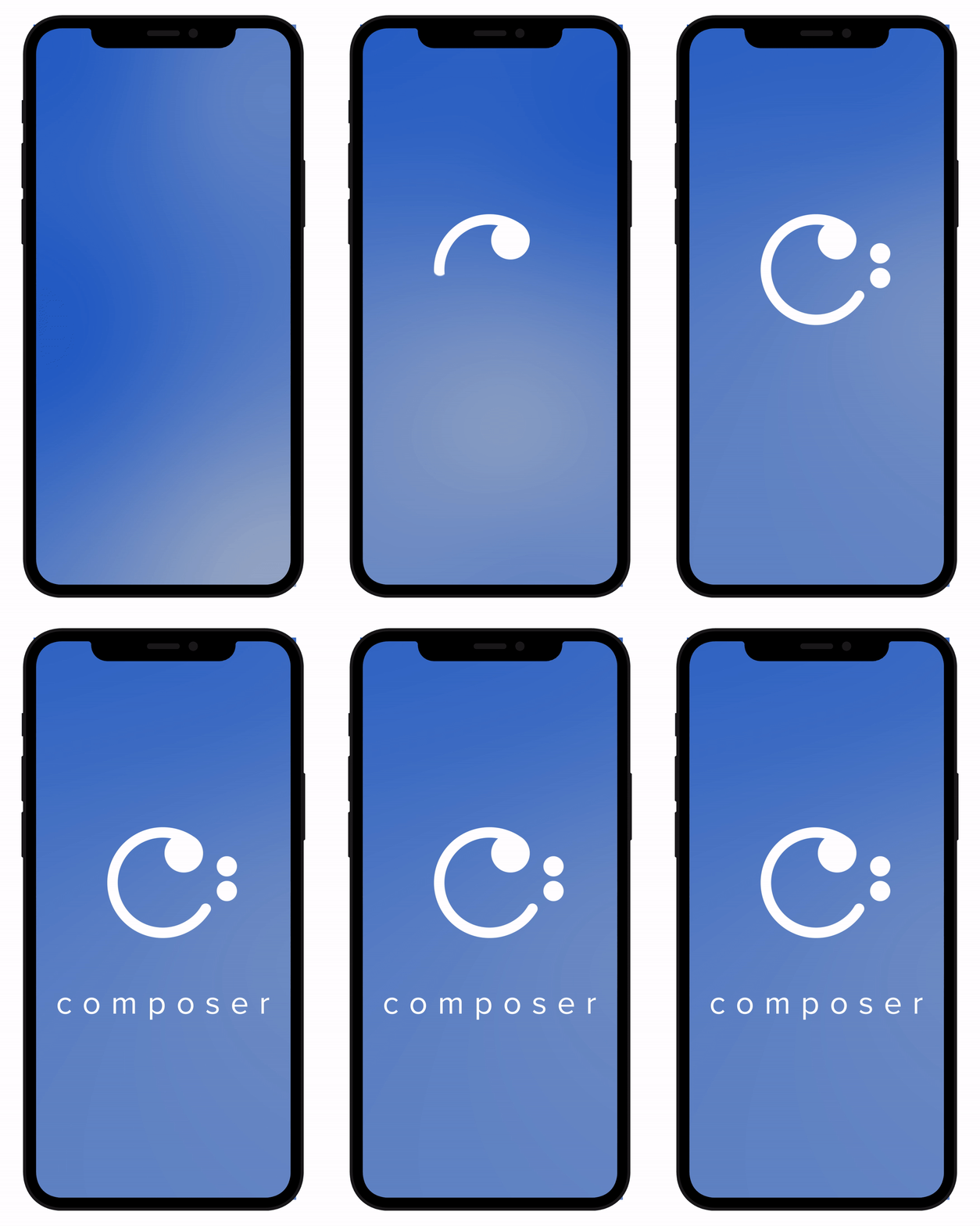
COMPOSER
Problem Statement
People journal inconsistently, usually only when something goes wrong, and abandon the habit before it becomes useful. Music, meanwhile, is already doing the emotional processing work every day. The problem is that no one has connected the two.
Objective
Build a journaling app that uses your own words to generate a playlist that meets you where you are emotionally, and leads you somewhere better.
USER RESEARCH
Overview
The research confirmed what I already knew from personal experience: people journal in bursts, usually when something goes wrong, and then fall off. Music, on the other hand, is a daily constant. It's how most people actually regulate their emotions. The question was whether you could use one habit to sustain the other.
General Findings
People journal most when they're struggling — but that's exactly when building a new habit is hardest.
Privacy matters enormously. People want one trusted place, not thoughts scattered across four apps.
Music is already doing the emotional processing work. Most people just hadn't connected the two practices yet.

USER PERSONAS
THEO, 31, works as a visual designer who prefers solitary thought processes yet finds enjoyment in social environments. Technologically adept and recently single.

“I need to decompress at the end of the day. I just never know how to start.”
Key Characteristics
Introverted, creative, thoughtful.
Pain Points
Experiences physical and emotional exhaustion from work; easily flustered.
Goals and Needs
Increase awareness of mood changes; manage work-related stress.
SELENE, 28, works as a publicist for a tech company who enjoys socializing before she prepares for bed using music to create emotional experiences.

“I build a playlist for everything. I just never thought to write about why.”
Key Characteristics
Outgoing, creative, self-reflective.
Pain Points
Maintains a busy social life; journals across multiple platforms; neglects journaling during positive moods.
Goals and Needs
Be more present; journal more consistently; establish a habit of regular self-check-ins.
COMPETITIVE ANALYSIS
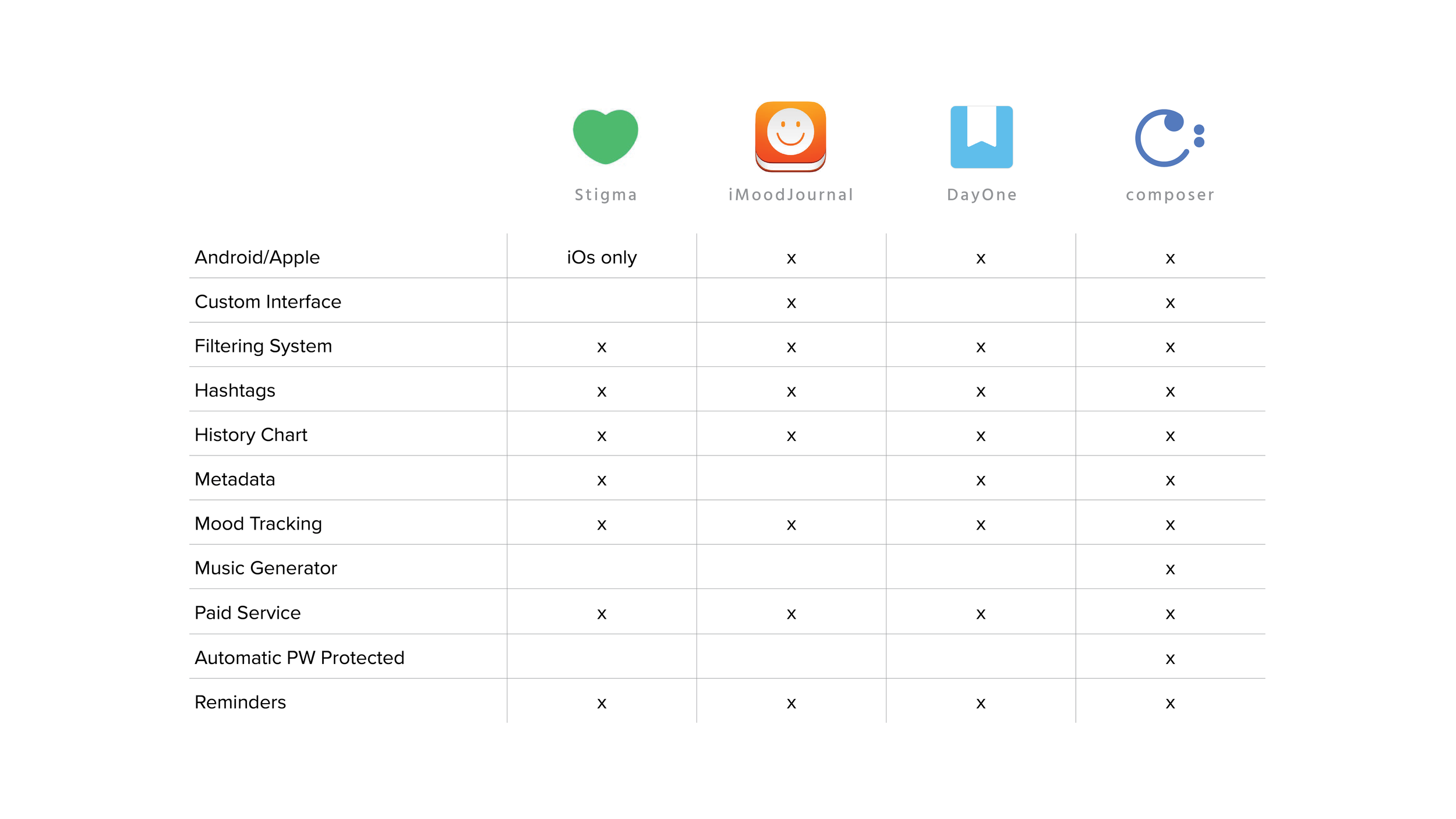
Every competitor does one thing well. Day One is a strong journaling app. Spotify knows your taste better than you do. But none of them connect the two. Composer lives in that gap — the place where what you're writing and what you're listening to are actually the same conversation.
IDEATION AND BRAINSTORMING
The concept started with a breakup and the playlist I built to survive it — arranged from the most defeated song I knew to something triumphant at the end. I realized I'd been processing grief through sequencing, the same way a journal entry moves from pain to perspective. That became the design direction: what if your words could generate that journey automatically?
From there, I explored three directions:
AI-generated playlists keyed to emotional language in journal entries.
Mood tracking visualized through word clouds and charts.
Music connected to your actual streaming history — so the algorithm knows your taste, not just your mood.
CARD SORTING
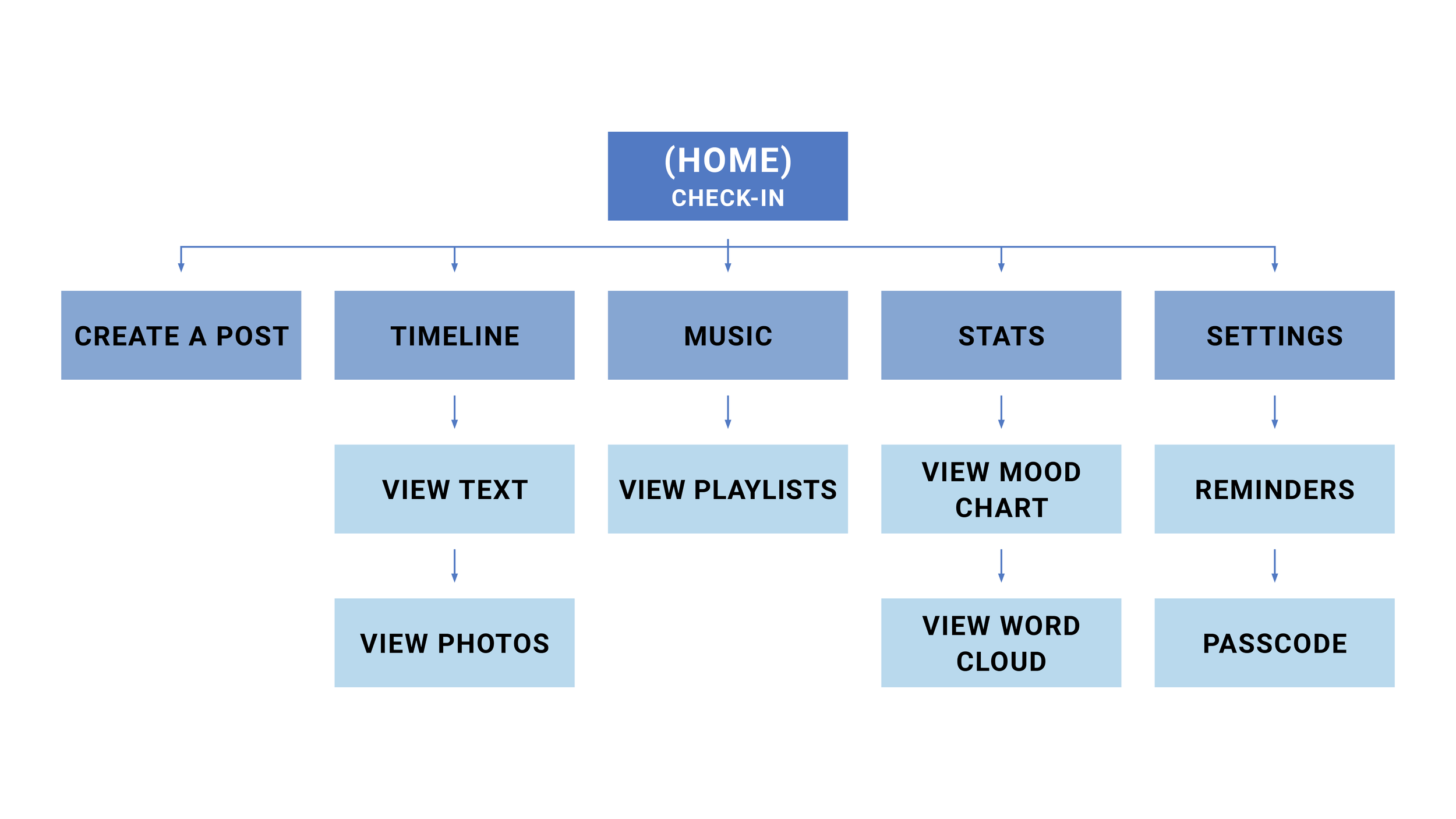
To understand how users naturally organized the app's features, I ran a card sorting exercise. The patterns that emerged directly shaped the final navigation structure.
Findings
Text creation and post creation were always linked by users who often added file attachments and post editing.
Mood charts and statistics appeared together in groups while tagged keywords connected to either mood charts or statistics.
Users typically grouped music functions such as edit, generate, and playlist viewing together and some added sync functionality.
Users associated camera functions with photo tasks and some of them included export and backup options.
Users typically grouped reminders and settings together and some added backup and sync features.

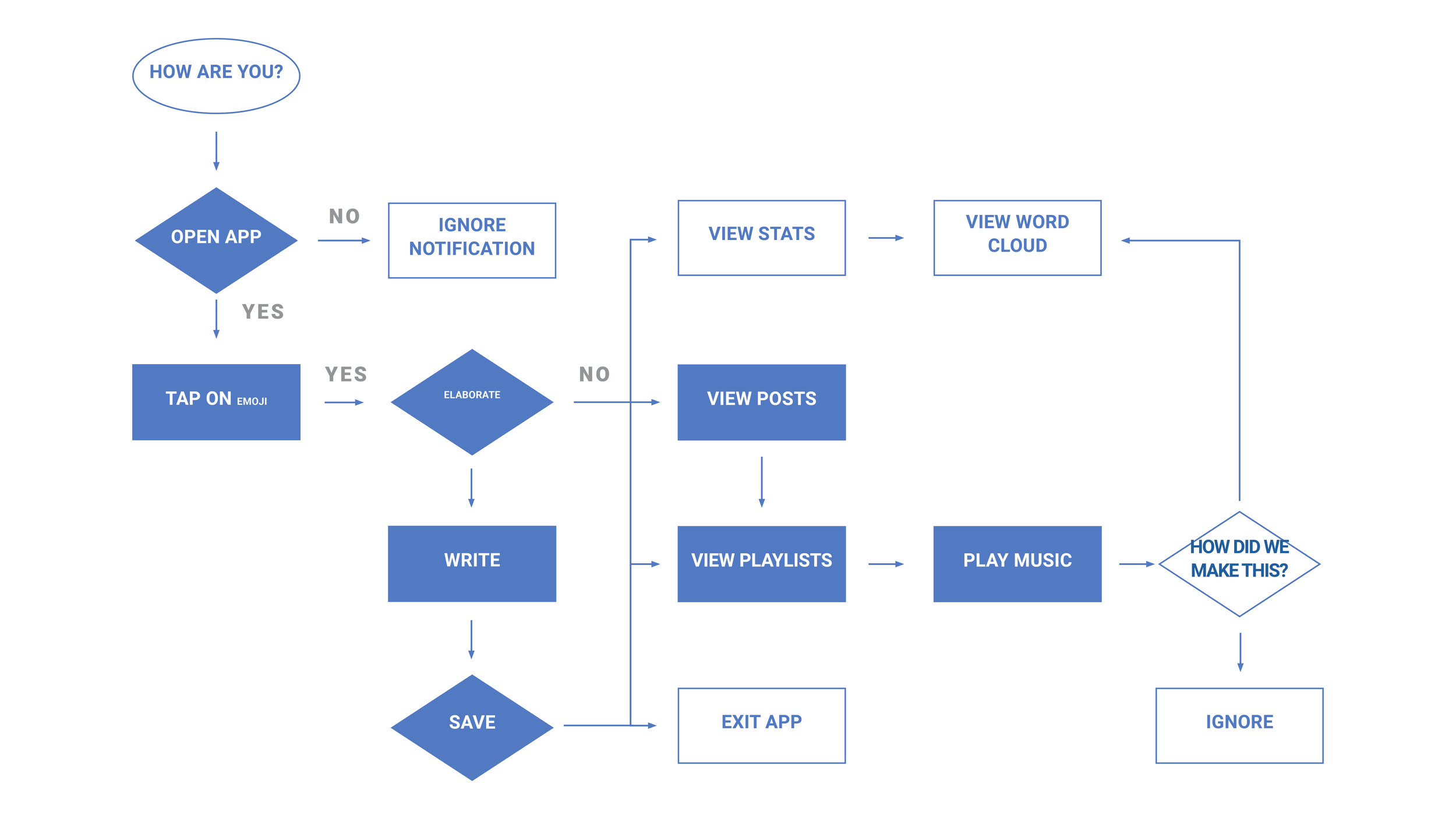
USER FLOW
SITE MAP
WIREFRAMING
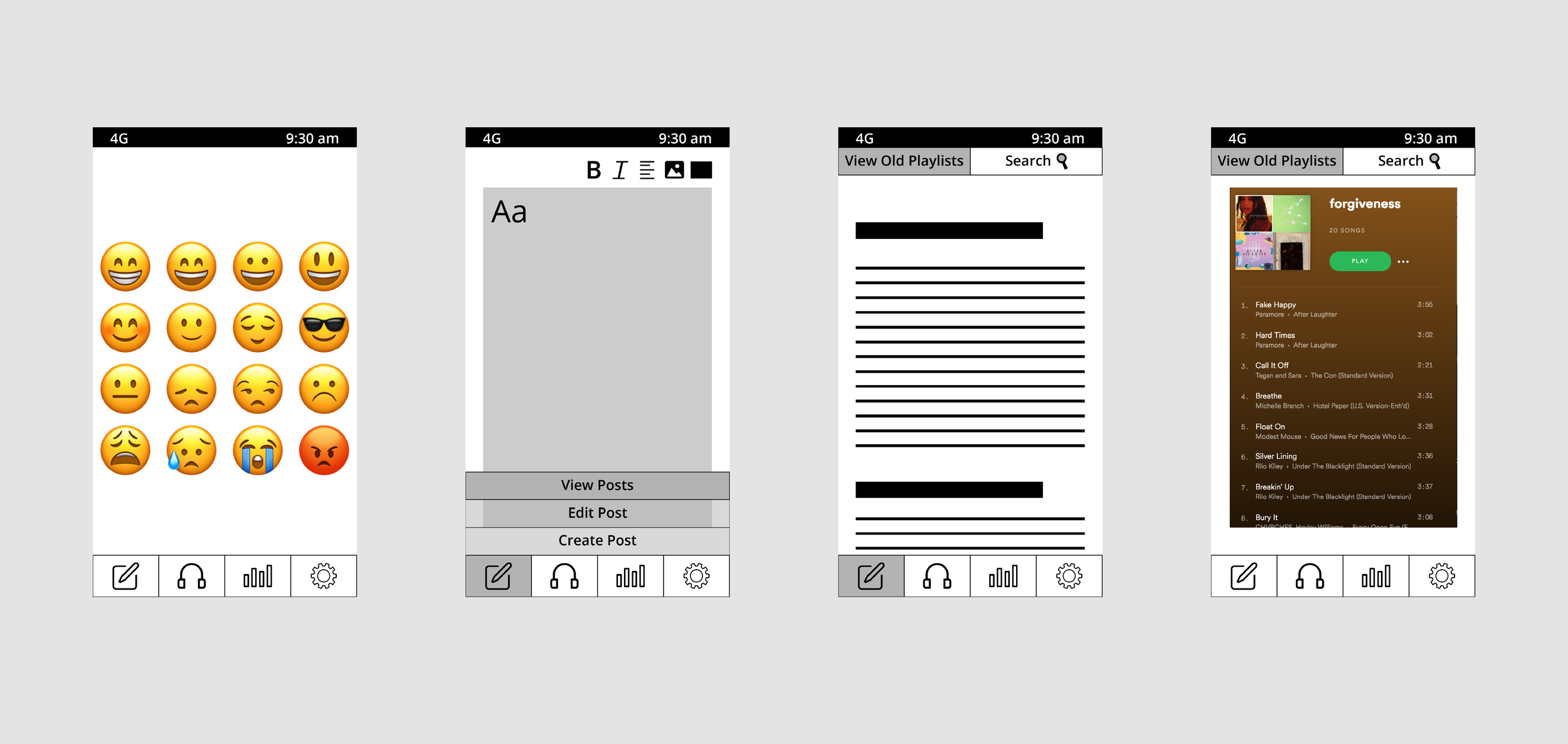
The low-fidelity prototype revealed friction I hadn't anticipated. Users hit three consistent stumbling blocks:
Uncertainty about editing initial responses during check-ins.
Users found it challenging to locate the editing controls for previous journal entries.
Ambiguity in some emoji representations.
What these findings confirmed: the path from writing to music had to feel inevitable, not like an extra step the app was making you take.
HIGH FIDELITY PROTOTYPING
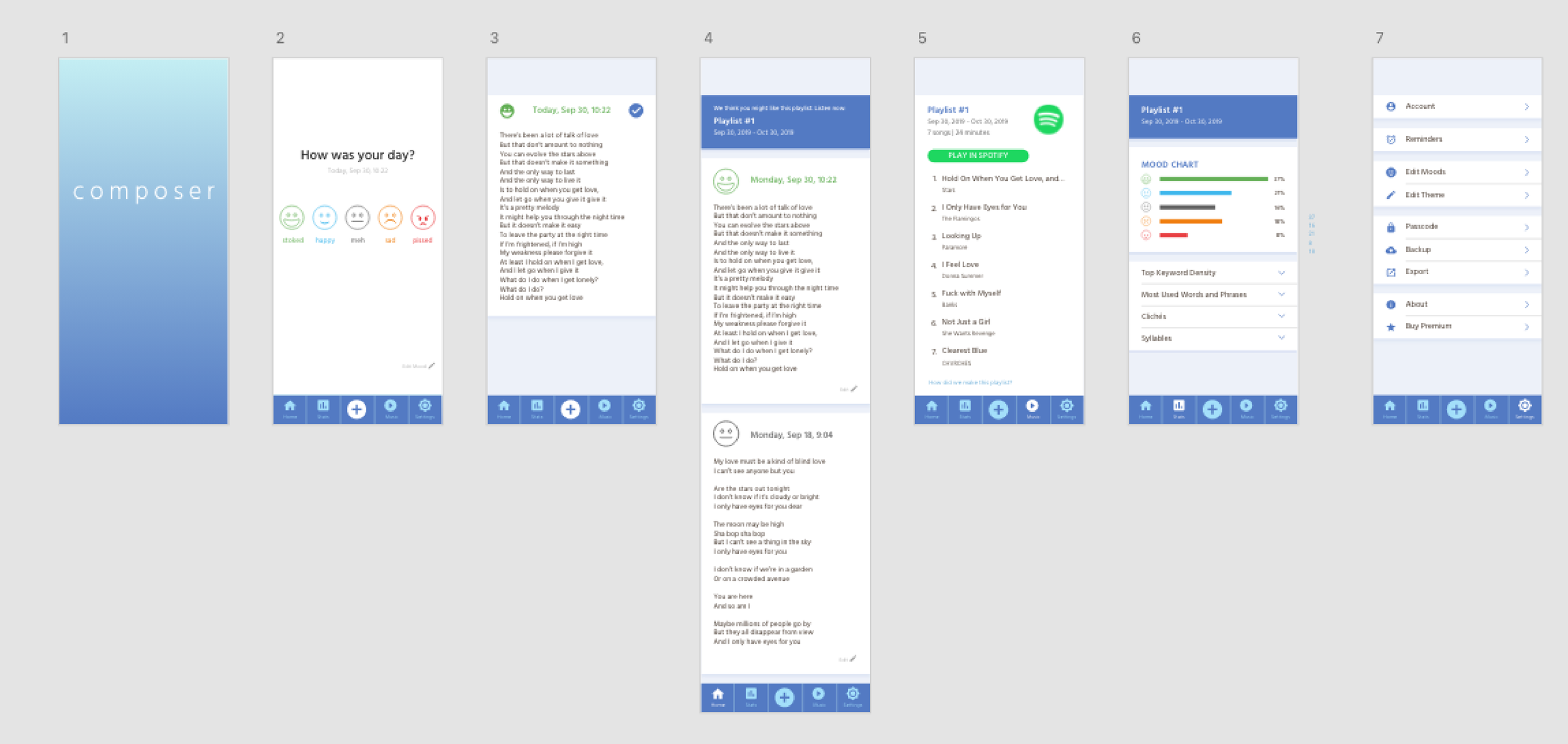
Four rounds of testing later, the navigation was cleaner and the experience more intuitive. The specific changes:
The "playlist" feature was taken out of "view post" and moved to the "music" tab.
Simplified the filtering system, eliminating user confusion.
We substituted the "x" button below the "create a post" section with an emoji to make the editing function clearer.
The interface now includes "edit" and "trash" buttons on the upper-right side of each record for straightforward access.
Limited the number of emojis to avoid overwhelming users with too many options.
The goal in every iteration was the same, fewer decisions standing between the feeling and the music.
In Conclusion
Composer is a concept, but the feeling that made me build it was real. Sometimes you're not ready to write about what you're going through, but you already know the song. This app closes the distance between the two. I'd build this.