eyes wide shut dating app
UX/UI Mobile App Case Study
A concept dating app designed to give personality the chance to land before a photo has the chance to filter.
Overview
As an Asian man, I grew up aware of a specific kind of invisibility. The history runs deep. From wartime internment to Hollywood casting white actors in yellowface, Asian men in America have been consistently portrayed as weak, emasculated, and undesirable. That narrative didn't stay in the past. It showed up in dating apps. Research confirmed what many people already felt: Asian men and Black women receive statistically fewer matches than any other group on mainstream platforms.
I talked to close friends who are Black women and they described the same exhaustion. Being thoughtful, interesting, and genuine, and still receiving significantly less engagement than their peers. The data matched the feeling. So I designed an app that fixes the premise, not just the interface.
But the problem is bigger than any one group. Dating apps are built around the photo, a fast visual judgment that disadvantages anyone who doesn't fit the algorithm's idea of desirable. Eyes Wide Shut is for everyone who has ever been more interesting in person than on a profile. It's built with particular intention for BIPOC users, and designed to benefit anyone who believes a better conversation makes a better match.
Before you see anyone's photo, you're already in a conversation. Responding to prompts, showing your sense of humor, demonstrating how you think. The face reveal comes later, after you've already decided you like this person. Think Love Is Blind, but as an app.
Goals
Make personality, humor, and wit the primary unit of attraction before photos enter the picture.
Build a more equitable experience for BIPOC users who are statistically underserved by mainstream platforms.
Design a system where bias has nowhere to operate by removing the photo-first mechanic entirely, creating a fairer experience for everyone.
Creative Direction
UX/UI Design
User Research
Wireframing
Prototyping
Branding
Prototype
App Design
Case Study
Eyes Wide Shut
Problem Statement
Mainstream dating apps are built around the swipe, a fast visual judgment that statistically disadvantages Asian men and Black women more than any other group. This isn't accidental. It's the logical output of a system that optimizes for speed over substance and appearance over everything else.
Objective
Design a dating experience where personality, humor, and wit do the work first, and the photo comes later.
USER RESEARCH
Target Audience
Adults 25 to 35 who are open to a personality-driven approach to dating. The app is not built exclusively for any one group but designed so that no group is quietly disadvantaged by the mechanic.
Pain Points
The people I spoke with described a specific kind of exhaustion: putting real effort into their profiles, being genuinely interesting, and still receiving significantly fewer matches than their peers. Close friends who are Black women told me they had all but given up on certain platforms. The problem isn't the people. It's the premise.
Research Methods
I conducted surveys and interviews with over 15 people across different backgrounds, ages, and dating app experiences. Three things came up consistently:
People want to feel curious about someone before they feel judged by them.
Anonymity in early interactions lowers anxiety and opens up more honest conversation.
Text prompts and voice messages create more meaningful first impressions than photos alone.
COMPETITIVE ANALYSIS
Tinder, Bumble, Hinge, and Grindr all work — easy interfaces, wide user bases, real matches. But they share one foundational problem: they're built around the photo. The swipe is fast and visual by design, and that speed rewards appearance over everything else. For users who don't fit conventional beauty norms, that's not a quirk. It's the whole system working against them.


UI Design
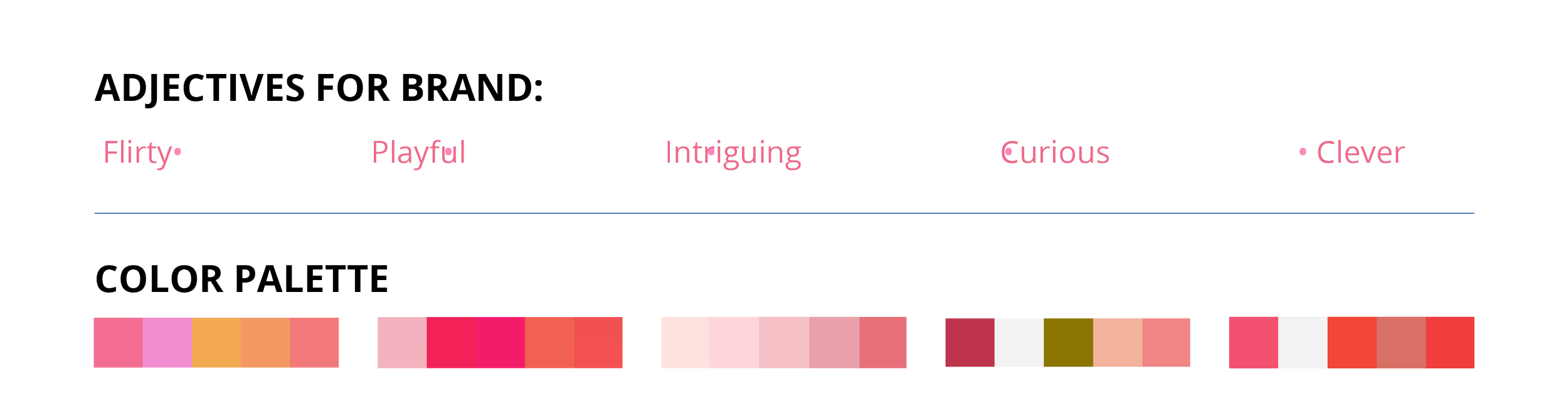
Warm Color Palette: Not because it looked nice, but because safety is the first thing someone needs to feel before they're willing to be honest with a stranger.
Minimalist Layout: The less visual noise, the more the words carry weight. Every choice pushes attention back to the prompt.
Gamified Interactions: Unlockable features reward conversation depth, not frequency. You earn the photo by being interesting.
Key Features
Blind Matching: You respond to each other's prompts before either of you sees a photo. You're already in a conversation before you're making a judgment.
Time-Gated Profile Reveals: Photos unlock only after a set number of real interactions. By then, you already know if you like this person.
Voice & Text Interactions: Short voice messages add dimension without the pressure of a phone call.
Curated Personality Pairing: AI matches based on interests and response patterns, not appearance.
WIREFRAMING
Low-Fidelity Wireframes
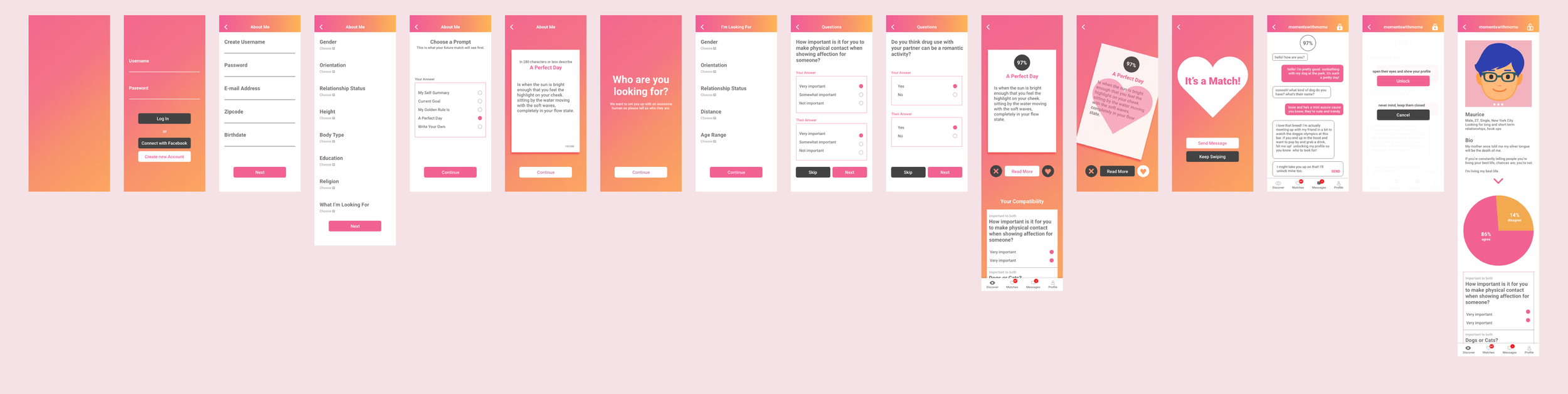
The low-fidelity wireframes were built around one constraint: the photo could not be the first thing you see. I designed the layout so prompts filled the screen, clean and unhurried, with just enough interaction to start a real conversation. No visual competition. No hierarchy that put face above thought.

HIGH-FIDELITY PROTOTYPING
The high-fidelity screens pushed the visual identity into place: a warm, grounded palette with typography that keeps focus on the words. The final prototype makes the personality-first premise feel natural rather than announced. It doesn't tell you it's doing something different. It just feels different.
Results & Learnings
Prototype testing revealed a few things worth noting:
People were more likely to send the first message when responding to a prompt than when looking at a photo.
Testers reported feeling less pressure to present a curated version of themselves.
Voice interaction tested better than expected — more personal than text, less intimidating than a call.
These findings came from prototype testing, not a live launch — and they shaped every decision in the final design.
Next Steps
Conduct a larger beta test across a broader range of ages, backgrounds, and locations to validate that removing the photo-first mechanic reduces bias in matching outcomes across all users.
Develop the AI-driven interest pairing to go deeper than keyword matching, focusing on conversational style and humor.
Explore anonymous video messaging as a middle step between voice and photo reveal.
In Conclusion
eyes wide shut started as a personal question: why does the system work against the most interesting people in the room? This is a concept, fully designed, not yet built. But the problem it's solving is real, the research behind it is real, and the frustration that sparked it is real. I'd build this.